The Ultimate Baby Products Checklist for First-Time Parents
Preparing for a new baby can feel like standing in the middle of a tiny but fast-growing department store, with every shelf insisting it contains a must-have. This guide sorts the useful from the merely fashionable so first-time parents can buy with more confidence and less stress. It explains what each product category does, when it matters, and which features are worth paying for. Along the way, it highlights safety, comfort, storage, and budget trade-offs that shape everyday life after birth.
1. Start With a Plan: The Real Outline Behind a Useful Baby Products Checklist
Before comparing brands, colors, or clever marketing names, first-time parents need a simple framework. The most practical baby checklist is built around everyday routines, not around store aisles. In other words, think about what you will do with your baby from morning to night: feed them, change them, help them sleep, carry them safely, bathe them, dress them, and comfort them. Once you organize products around those tasks, the noise quiets down. What looked like a mountain of decisions becomes a series of smaller, manageable choices.
A good outline for baby shopping usually includes five core areas:
- feeding essentials
- sleep and nursery basics
- diapering and hygiene products
- travel and mobility gear
- clothing, play, and developmental extras
This approach matters because first-time parents often overbuy in categories that look exciting and underbuy in categories that get used ten times a day. Fancy nursery decor may catch the eye, but a reliable changing setup or a comfortable feeding chair often affects daily life more. Newborns also grow fast, so some products have a very short useful window. A compact bassinet may be perfect for the early months, while a decorative newborn lounger might spend more time folded in a corner than in active use.
Budget planning also becomes easier when you divide products into three groups: essentials, helpful upgrades, and nice-to-have extras. Essentials are items tied to safety and daily care, such as a car seat, a safe sleep space, diapers, basic clothing, and feeding supplies. Helpful upgrades might include a bottle warmer, white noise machine, or baby carrier, depending on your routine. Extras include products that can be enjoyable but are not necessary for every household.
It is also wise to think about space, cleaning time, and who will use the product. A large stroller may feel smooth on sidewalks but be frustrating in a small apartment. A wipe-clean changing pad may suit busy homes better than one with multiple fabric covers. Grandparents, babysitters, and partners may all handle gear differently, so ease of use matters. A baby product should not feel like assembling a satellite each time you need it.
Finally, check safety standards and recall information before buying. Register major baby gear when possible, follow weight and age limits, and read assembly instructions carefully. The best checklist is not the longest one. It is the one that helps your home run calmly, safely, and with fewer late-night surprises.
2. Feeding Products: What You Need, What Changes by Routine, and What Is Often Optional
Feeding products are among the most personal baby purchases because no two feeding routines look exactly the same. Some families breastfeed exclusively, some use formula, and many combine methods over time. That means the smartest checklist is flexible. Instead of buying every feeding item at once, begin with a reliable starter setup and expand only after you learn what your baby tolerates and what your household actually uses.
For bottle feeding, whether full-time or occasionally, bottle shape and nipple flow matter more than trendy design. Newborns usually do best with slower-flow nipples, and it often takes trial and error to find a bottle your baby accepts comfortably. Materials differ too. Plastic bottles are lightweight and budget-friendly, glass bottles are durable and easy to sanitize but heavier, and silicone bottles are soft and less breakable though often more expensive. None is universally best; the right choice depends on your comfort with cleaning, handling, and cost.
If breastfeeding is part of the plan, a few products can make life easier without turning your kitchen into a feeding laboratory. Useful items may include:
- breast pads for leaks during the early weeks
- nursing bras or tops for convenience
- a breast pump if returning to work or sharing feeds
- milk storage bags or reusable containers
- a nursing pillow for added support during longer sessions
Parents often ask whether they need a bottle sterilizer, bottle warmer, or drying rack. The answer depends on household routine. A drying rack is usually practical because bottles, pump parts, and pacifiers multiply quickly. A sterilizer can save time for frequent bottle use, though some families are comfortable with regular boiling or dishwasher sanitation where appropriate. Bottle warmers are convenient, but many babies accept milk at room temperature or after being warmed in a bowl of warm water.
There are also feeding facts that help set expectations. Newborns commonly feed 8 to 12 times in 24 hours, so items that reduce washing and setup time quickly prove their worth. Burp cloths, bibs, and easy-clean surfaces are not glamorous purchases, but they earn their place almost immediately. Later, when solids begin, the checklist changes again. A sturdy high chair with a secure harness, a footrest, and easy-to-clean seams can be more useful than a stylish model with extra padding that traps food.
When comparing products, prioritize hygiene, comfort, and realistic maintenance. A beautiful item that is annoying to clean often loses its shine within a week. Good feeding gear should simplify a repetitive task, not turn every meal into a small engineering project. In the soft blur of early parenthood, convenience is not laziness. It is survival with better design.
3. Sleep and Nursery Essentials: Safety, Comfort, and the Difference Between Need and Décor
Sleep products attract some of the strongest emotions and some of the most aggressive marketing in the baby category. Parents want a peaceful nursery, a rested baby, and ideally more than two consecutive hours of sleep themselves. Yet the most important rule is simple: safe sleep comes before aesthetic choices. According to guidance from major pediatric organizations such as the American Academy of Pediatrics, infants should sleep on their backs on a firm, flat surface, with no loose bedding, pillows, or soft objects in the sleep space. That recommendation is not stylish language. It is a safety foundation.
The first major decision is usually bassinet versus crib. A bassinet is compact, portable, and convenient for room-sharing during the newborn stage. It often works well in smaller bedrooms and makes nighttime checks easier. A full-size crib lasts longer and can be more cost-effective over time, especially if it converts into a toddler bed. Some families use both: a bassinet early on, then a crib later. If budget or space only allows one, a crib is the longer-lasting option, while a bassinet may be the handier short-term choice.
Mattresses and sheets should also be chosen for function over fluff. A baby mattress should fit snugly in the crib or bassinet, and fitted sheets should stay secure without bunching. Decorative bumpers, heavy quilts, and plush sleep accessories may look inviting in photos, but they are not recommended for infant sleep spaces. This is one of those rare parenting areas where simpler really is better.
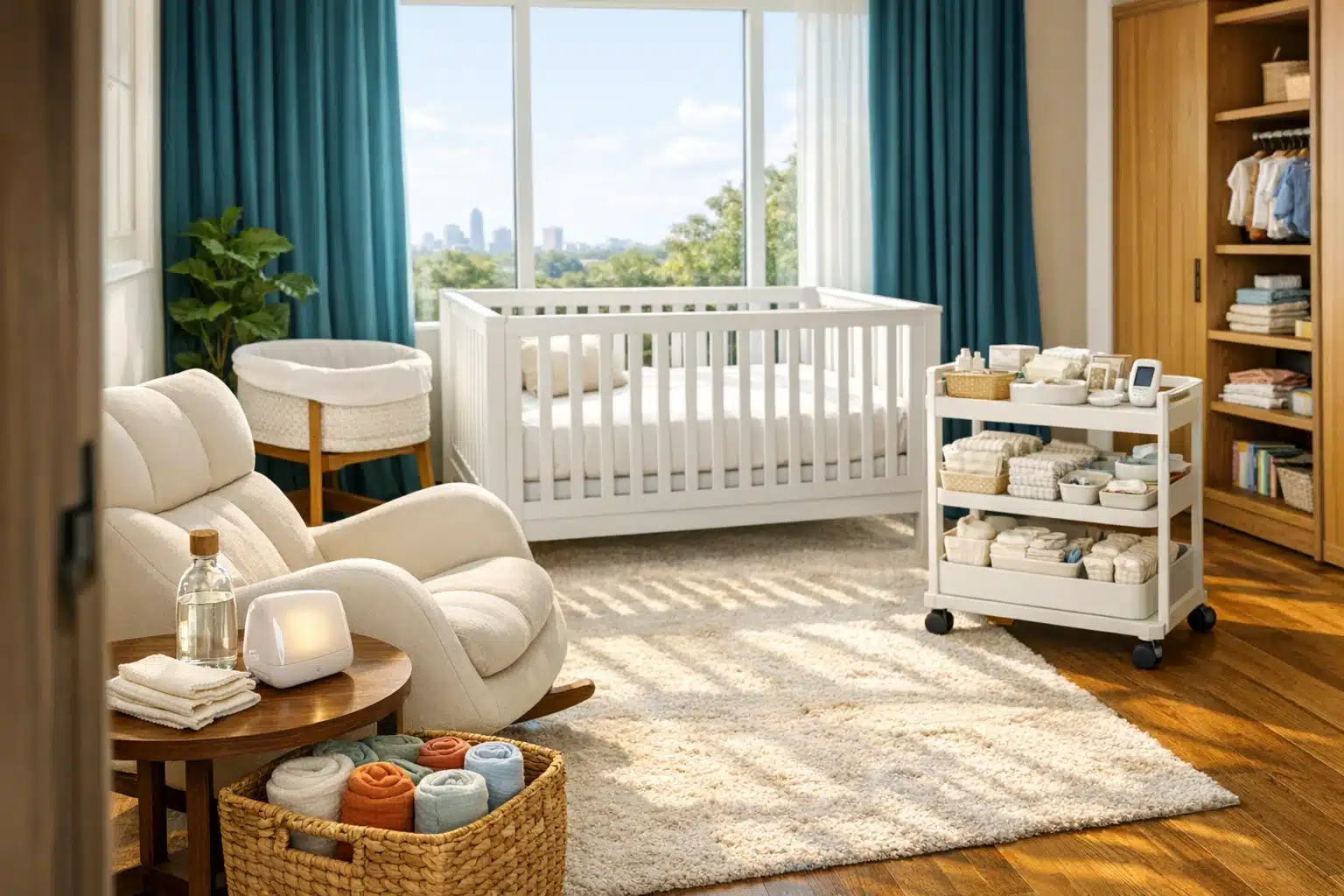
Beyond the sleep surface, the nursery setup can be designed around practical movement. A useful room often includes:
- a dimmable light for night feeds and changes
- blackout curtains if daylight disrupts naps
- a comfortable chair for feeding or soothing
- a small table or cart stocked with essentials
- storage bins that keep clothes, swaddles, and diapers within reach
Baby monitors are another common comparison point. Audio monitors are straightforward and often sufficient in smaller homes. Video monitors offer visual reassurance and can be helpful when naps happen in another room. Wi-Fi monitors add app access and smart features, but they also introduce setup complexity and privacy considerations. For many parents, the best monitor is simply the one they will reliably use without frustration at 2 a.m.
Swaddles, sleep sacks, and white noise machines can support bedtime routines, but they are not identical in value for every baby. Some infants love being swaddled early on, while others resist it. Sleep sacks tend to be more broadly useful as babies grow and outgrow swaddling. White noise can be calming in busy homes, though the device should be used thoughtfully and at a safe volume.
A nursery does not need to look like a magazine spread to work beautifully. It needs clear pathways, accessible supplies, and products that reduce stress during the most repetitive hours of the day. When the room is designed well, it feels less like a showroom and more like a quiet backstage area where family life can keep moving.
4. Diapering, Bath, and Daily Care: The Products You Touch Most Often
If feeding gear runs the kitchen and sleep products shape the nursery, diapering and hygiene supplies quietly run the whole day. Newborns can go through 8 to 12 diaper changes in 24 hours during the early weeks, which means even small design choices matter. A wipes package that opens with one hand, a changing station set at the right height, or a diaper pail that truly controls odors can make a visible difference when you repeat the same task dozens of times each week.
The first big comparison is disposable diapers versus cloth diapers. Disposable diapers are convenient, easy to transport, and widely preferred for overnight use or travel. Cloth diapers can reduce ongoing waste and, depending on washing setup and long-term use, may lower costs over time. However, they require more laundry, storage, and routine management. Some families use a hybrid system: cloth at home, disposables outside. That middle path can offer flexibility without demanding full commitment.
For a changing area, the most useful setup is usually simple and efficient. You need a safe changing surface, diapers, wipes, a change of clothes, and a place for used items. Extras like wipe warmers are pleasant for some families, but they are rarely essential. More valuable are washable pad covers or wipe-clean changing pads, baskets that separate diaper sizes, and enough backup supplies to avoid emergency searches in the middle of the night.
Bath products also deserve a practical lens. A newborn does not need a shelf full of scented products. In fact, fewer products are often better for sensitive skin. A baby bathtub or sink insert can make bathing safer and less awkward, especially for first-time parents still getting used to handling a slippery, squirmy infant. Hooded towels, soft washcloths, and gentle cleanser are usually enough to start. As with clothing and bedding, breathable fabrics and easy washing matter more than decorative details.
A daily care kit is another area where thoughtful shopping beats bulk buying. Useful items commonly include:
- a digital thermometer
- a soft brush or comb
- baby nail clippers or a nail file
- a nasal aspirator
- diaper rash cream
- fragrance-free moisturizer if needed
Many parents underestimate how often these small tools are used. Trimming tiny nails, checking a temperature, or clearing a stuffy nose can become part of ordinary life very quickly. Choose products that are easy to hold, easy to clean, and easy to find in a drawer at odd hours.
Daily care products rarely headline a baby registry, but they are the quiet workhorses. They help parents move through messy moments with less fumbling and more confidence. In early parenthood, competence often looks like a basket of ordinary things placed exactly where you need them.
5. Conclusion for First-Time Parents: Travel Gear, Clothing, Playtime, and a Smarter Way to Finish the Checklist
Travel gear is one of the most important purchasing categories because some items are legally or practically required from day one. A rear-facing car seat is essential for the trip home and should be installed according to the manufacturer’s instructions and local safety guidance. When comparing infant car seats with convertible models, think about convenience versus longevity. Infant seats are portable and click into compatible strollers, which can be extremely useful during the early months. Convertible seats often last longer and may save money over time, but they are not designed to be carried around outside the car.
Strollers also vary widely in purpose. A full-size stroller usually offers better storage and smoother handling, while a lightweight stroller is easier to carry and fold. Travel systems appeal to many first-time parents because they combine stroller and car seat compatibility, though they can take up significant space. If you walk often, suspension, wheel size, and curb handling matter. If you use public transport or live in a walk-up apartment, folded size and weight may matter even more. The best stroller is not the one with the longest feature list. It is the one that fits your real routes.
Baby carriers and wraps are worth considering too. They can free your hands, help with short outings, and soothe babies who prefer close contact. Structured carriers offer support and adjustment options, while wraps can feel cozy and compact once learned. Comfort for the wearer is just as important as fit for the baby.
Clothing is another area where restraint saves money. Babies outgrow sizes quickly, and laundry happens often. Start with soft basics in manageable quantities: bodysuits, sleepers, socks if needed, hats for weather, and layers suited to your climate. Prioritize easy fastenings, gentle seams, and fabrics that wash well. Tiny jeans may look charming, but comfort tends to win every rematch.
Play products should follow development rather than shopping excitement. In the early months, a firm play mat, a few high-contrast toys, board books, and perhaps a simple bouncer or activity gym are often enough. Babies do not need a crowded toy collection to learn. They need safe space, responsive interaction, and a few well-chosen objects they can see, hear, and gradually grasp.
For first-time parents, the final lesson is this: buy for the days you will actually live. Choose products that support feeding, sleep, cleanliness, transport, and calm routines. Leave room to adapt after your baby arrives, because real life will reveal preferences faster than any registry guide. A thoughtful checklist is not about owning everything. It is about creating a home where the essential tasks of caring for a new baby feel a little easier, a little safer, and far less overwhelming.