Advantages of Solar Pool Heating Panel Systems for Homeowners
A warm pool changes how often a backyard gets used, but the wrong heating choice can turn that pleasure into a steady utility expense. Solar pool heating panel systems offer a practical middle path: they use sunshine, work quietly, and can deliver dependable temperature gains in many climates. Local solar pool heating services matter because performance depends on smart sizing, proper orientation, and regional weather patterns. This article outlines the key decisions, compares common options, and shows homeowners what to expect from installation and long-term care.
Article Outline
- Why local solar pool heating services play such an important role in system performance
- How solar pool heating panel systems work and what affects efficiency
- How solar compares with gas heaters and heat pumps for homeowners
- What to look for when choosing an installer and reviewing proposals
- What to expect from costs, maintenance, and long-term ownership
Why Local Solar Pool Heating Services Matter More Than Many Homeowners Realize
On paper, a solar pool heating system can look simple: put collectors in the sun, circulate water, and enjoy a warmer pool. In real life, the outcome depends heavily on location-specific details, and that is where local solar pool heating services become especially valuable. A company that regularly works in your area is more likely to understand the climate pattern that shapes performance. In one region, long sunny afternoons may make roof-mounted collectors highly effective for much of the year. In another, coastal fog, afternoon storms, high winds, or tree-heavy neighborhoods can change the design entirely. Sunlight may be free, but capturing it well is a local craft.
Local service providers also tend to be better at identifying the hidden variables that homeowners often miss during early research. Roof pitch, roof age, shade movement, plumbing runs, equipment pad layout, and pool usage habits all affect the final recommendation. Two homes on the same street can need different solutions. A south-facing roof with broad sun exposure may support an efficient collector array, while a nearby house with partial tree cover might need a larger panel area or a ground-mounted rack to achieve similar results. A knowledgeable local installer can spot these differences quickly and explain them in plain language.
There is also the practical side of permits, codes, and ongoing service. Many municipalities have specific requirements for roof penetrations, structural loading, plumbing modifications, and electrical components such as automation controls. A local contractor is more likely to know the permitting office, understand common inspection issues, and prepare a system that passes without unnecessary delays. That experience can save time and reduce the chance of costly rework. Homeowners often focus on the equipment itself, but the quality of the installation determines whether the system runs quietly, drains correctly, and survives changing weather year after year.
Service after installation matters just as much. Valves may need adjustment, controllers may need calibration, and seasonal inspections can catch small problems before they turn into leaks or weak performance. Local companies can usually respond faster when support is needed, and that matters during swim season when no one wants to stare at a beautiful pool that feels unexpectedly cold. For homeowners, the biggest advantage of hiring local is not just convenience. It is the combination of regional knowledge, site-specific design, and more accessible support, all of which increase the odds that a solar pool heating system will perform as expected.
How Solar Pool Heating Panel Systems Work and What Makes Them Effective
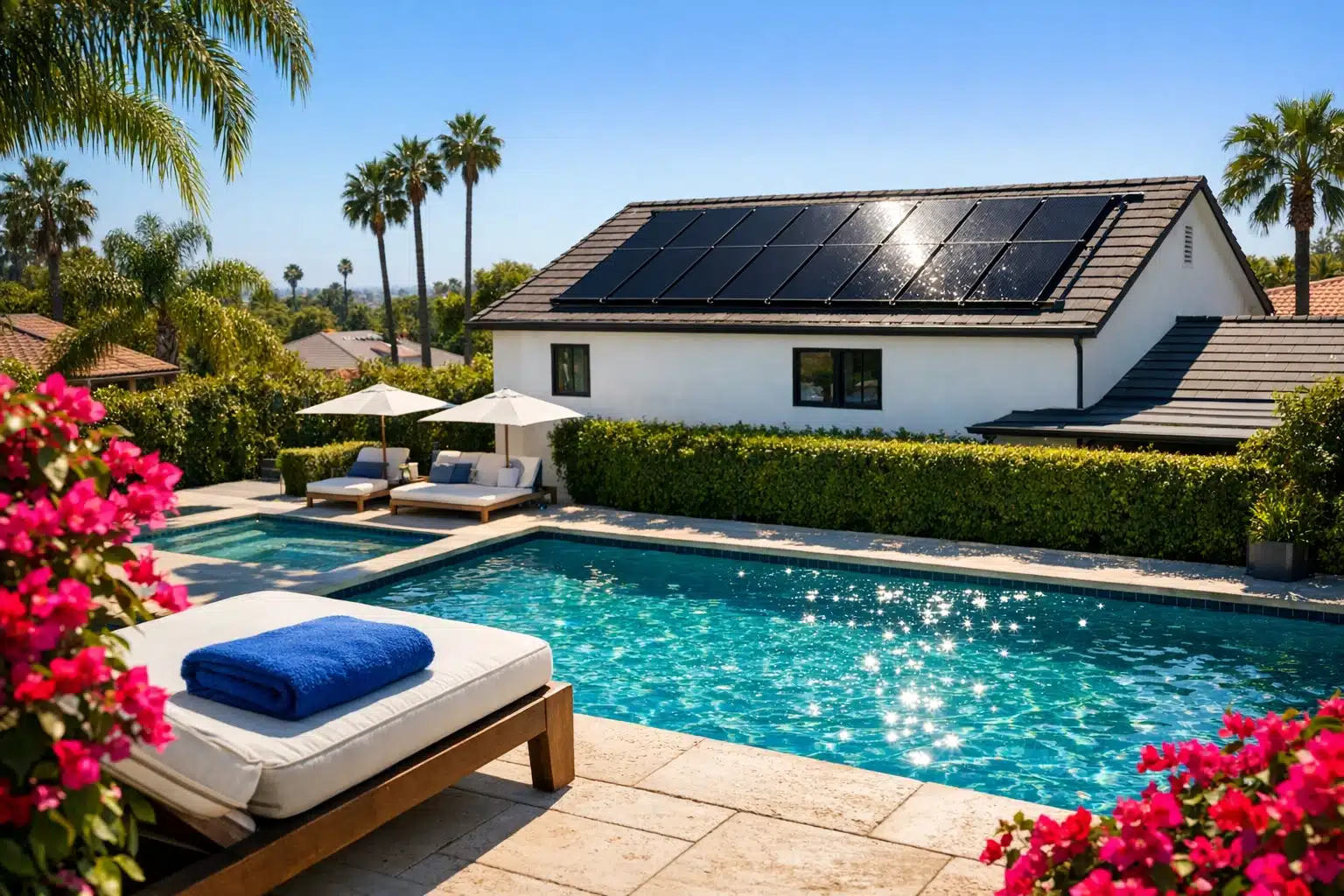
Solar pool heating panel systems are designed to use the pool’s existing circulation system to move water through solar collectors, where it is warmed by the sun before returning to the pool. Most residential systems use unglazed polymer collectors rather than the glass-covered panels often associated with domestic hot water or electricity generation. That choice makes sense because pool heating operates at relatively low temperatures, and the goal is not to produce very hot water but to gently raise the temperature of a large body of water over time. In other words, the system works more like a steady hand on the thermostat than a dramatic blast of heat.
A typical system includes several basic components:
- Solar collectors mounted on a roof, rack, or another sunny surface
- A filter and pump that move pool water through the system
- A flow control valve that directs water to the collectors when conditions are right
- Sensors and a controller that compare pool temperature with collector temperature
- Check valves and plumbing connections that help regulate safe water movement
When the controller detects that the collectors are warmer than the pool water, it sends water through the panels. As that water flows across the sun-warmed surface, it gains heat and returns to the pool. When the collectors are not warm enough, the controller bypasses them. This automatic operation is one reason many homeowners find solar pool heating appealing: once installed correctly, it can run with little daily attention.
Efficiency depends on more than sunshine alone. Collector size is a major factor, and installers often begin with a collector area equal to roughly 50 percent to 100 percent of the pool’s surface area, then adjust based on climate, desired swim season, wind exposure, and whether the homeowner uses a pool cover. A pool cover can significantly reduce heat loss overnight, which improves overall system performance. Placement matters too. Collectors generally perform best on surfaces with strong sun exposure for much of the day, and orientation can be fine-tuned based on latitude and roof shape. Plumbing layout, pump sizing, and control settings also affect how smoothly the system works.
One common misunderstanding is that solar pool heating makes a pool hot on demand. That is not its typical role. Instead, it extends the swim season and helps maintain a more comfortable temperature with low operating cost, especially during sunny periods. For homeowners who understand that solar is a gradual, efficient heating method rather than an instant one, the technology often feels refreshingly sensible. It takes a resource already landing on the roof and turns it into longer afternoons in the water.
Solar Panels Compared With Gas Heaters and Heat Pumps
The main advantage of solar pool heating panel systems becomes clearer when they are compared with the two other common pool-heating options: gas heaters and electric heat pumps. Each method has strengths, and the best choice depends on how a homeowner uses the pool. Solar tends to shine when the goal is to extend the season, maintain usable temperatures, and limit ongoing energy costs. Gas heaters are often chosen for fast temperature increases, while heat pumps are popular for steady heating in climates where electricity prices and outdoor temperatures make them practical. The right choice is less about hype and more about matching the equipment to the lifestyle.
If gas heating is a sprint, solar is a marathoner. A gas heater can warm a pool more quickly, which is useful for people who swim only occasionally or want short-notice heating for a weekend gathering. The trade-off is fuel cost. Natural gas or propane bills can rise noticeably when the heater is used often, especially for larger pools or longer seasons. Heat pumps sit somewhere in the middle. They can be efficient compared with direct electric resistance heating, but they still rely on electricity and generally work best when outdoor air temperatures stay within a favorable range. In cooler conditions, their performance may drop.
Solar pool heating, by contrast, usually has a higher upfront equipment-and-installation cost than doing nothing, but it can offer lower routine heating cost after installation because it uses sunlight as the primary heat source. That is why many homeowners see solar as a long-term ownership decision rather than a quick seasonal purchase. The benefits are often most noticeable for families who use their pools regularly and want consistency rather than sudden bursts of heat.
For homeowners, the practical advantages of solar often include:
- Lower day-to-day heating cost compared with fuel-based heating
- Quiet operation with few moving parts beyond normal circulation equipment
- Season extension without constant manual adjustment
- Compatibility with pool covers and automation systems
- A smaller operational environmental footprint than fossil-fuel heating
There are, of course, limitations. Solar depends on available sun and is not the fastest way to raise water temperature. Some homes also lack suitable roof space or enough unobstructed exposure. Still, when local conditions are favorable, solar panel systems offer a balanced mix of comfort, economy, and simplicity. For many households, that balance is the real advantage. It is not about making bold promises. It is about creating a pool that gets used more often, with fewer worries about what each extra degree will cost.
Choosing a Local Solar Pool Heating Service Provider With Confidence
Once a homeowner decides to explore solar pool heating, the next step is choosing an installer who can turn a good idea into a well-performing system. This part deserves real attention. A polished website or a low quote alone does not guarantee a solid result. The best local solar pool heating services usually stand out because they ask detailed questions before offering recommendations. They want to know pool size, current equipment, typical swim months, whether a cover is used, available roof or yard space, and what the homeowner expects from the system. That curiosity is a good sign. It shows the proposal is being built around the property rather than copied from a template.
A strong estimate should include more than a total price. Homeowners should look for clear information about collector type, estimated collector area, mounting location, control system, plumbing route, warranty coverage, and any permit or inspection costs. If a company recommends a surprisingly small panel area without explaining trade-offs, or avoids discussing roof condition and structural suitability, that should raise questions. A reputable installer should also explain how the system will drain, how automation will work, and what seasonal service may be needed in your climate.
Helpful questions to ask include:
- How many solar pool heating systems have you installed locally?
- How do you size the collector area for a pool like mine?
- Will my roof or yard placement affect performance during spring and fall?
- What warranties apply to collectors, controls, and workmanship?
- Do you handle permits, inspections, and post-installation service?
- Can you provide references from nearby homeowners?
It is also wise to compare at least two or three proposals. The goal is not simply to find the lowest number, but to understand differences in design philosophy. One installer may prioritize lower upfront cost, while another may recommend a larger collector area to improve shoulder-season performance. One may include automatic controls and better monitoring, while another assumes manual operation. These differences affect long-term satisfaction.
Local reputation matters because solar pool heating is not just a product purchase; it is a service relationship. Installers with a consistent presence in the area are often easier to reach for adjustments, repairs, and future equipment upgrades. Reviews, referrals from pool service companies, and even a quick look at how clearly the contractor communicates can reveal a lot. Homeowners do not need to become engineers before hiring a company, but they do benefit from asking careful questions. A thoughtful installer will welcome them, because informed clients usually make better project partners.
Costs, Maintenance, and Summary for Homeowners
Cost is often the moment where solar pool heating moves from interesting idea to serious household decision. Residential systems vary widely in price because no two installations are exactly alike. Pool size, collector area, roof height, plumbing complexity, automation features, and local labor rates all influence the final number. In many markets, homeowners may see installed costs ranging from a few thousand dollars for simpler setups to considerably more for larger or more complex projects. That range is broad for a reason: a system designed for a small screened pool in a very sunny climate is not the same as one intended to stretch the season for a larger pool with partial shade and a long plumbing run.
Common cost drivers include:
- The total square footage of collectors needed
- Roof accessibility and mounting complexity
- Condition and layout of existing pool equipment
- Automatic controls, valves, and sensor packages
- Permit requirements and local labor costs
- Whether a pool cover is used to reduce heat loss
Installation itself is usually less mysterious than many homeowners expect. After the site review and proposal approval, the contractor confirms placement, secures permits if required, mounts the collectors, ties the plumbing into the circulation system, installs controls, and tests operation. A good installer should walk the homeowner through the system afterward, showing how heating is activated, what temperatures are realistic, and how to spot issues such as reduced flow or air in the lines. Clear handoff matters. Even an automated system benefits from an owner who understands the basics.
Maintenance is generally modest, but it should not be ignored. Homeowners should keep the pool circulation system in good shape, monitor for leaks, and schedule occasional inspections, especially after severe weather or roof work. In some climates, winterization or seasonal startup may be part of routine care. Using a pool cover remains one of the simplest ways to protect the value of the system because it helps preserve the heat that solar collectors add during the day. A beautifully heated pool can still lose significant warmth overnight if the surface is left exposed to cool air and evaporation.
For homeowners, the bottom line is straightforward. Solar pool heating panel systems are most attractive when you want a longer swim season, lower routine heating expense, and a quieter, more passive way to keep the water comfortable. They are not instant-heating machines, and they work best when matched carefully to the property and climate. That is why local service matters so much. If you are comparing options for your backyard, ask not only what the panels cost, but how well the system will be designed for your home, your weather, and the way your family actually uses the pool. That is where the true advantage begins.